Mud Island Community Garden Biodiversity Action Group (BAG) met for the 1st time on Sat April 18th. We shared a sense of collective hope from taking positive action to promote biodiversity, a strong interest to learn more about what we can do, and some initial ideas:
“I am doing a biodiversity course right now; situation seems quite depressing, we need some positive actions to balance it.”
“I removed my lawn and planted shrubs, at first it was for convenience and ease of maintenance, but now it’s become a mini forest.”
“Just letting stuff grow wild is not biodiversity; we should keep a look at what we have and encourage more diverse stuff.”
“We do need hope for the next generations.”
“It’s great to be around people who understand the importance of biodiversity and care about similar things; we need to stop the environment degradation, and when needed push back against bad decisions made by authorities.”
“I hope we can create a pocket of biodiversity inside inner city that can we later spread out from; we could also collect seeds of wild, native plants to seedbomb around.”
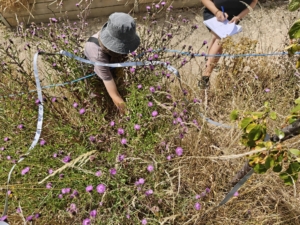
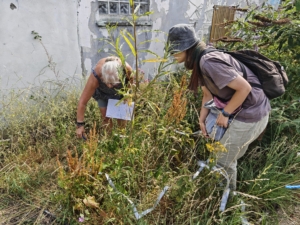
We had a group walk around the garden margins assessing what we have there, and what could be improved upon. We had many ideas (see “More ideas” below) and agreed some initial actions:
Agreed actions 1. Put up the bird boxes and install bee hotel for wild and solitary bee species nesting
2. Cut back/remove Buddleia (except the one beside the Cottage)
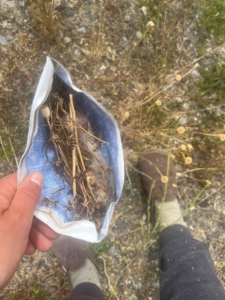
3. Smother the Japanese Knotweed by wrapping in plastic bag while wait for more action/advice
4. Contact new DCC Biodiversity officer, let them know about the group and see if they have any plans and/or supports in place that we could work with
5. Keep a calendar of biodiversity events for the group
6. Place signs on native plants & biodiversity features around Garden (could use QR codes) ahead of the Open Day
7. Have a stall at MICG Open Day on June 16th and share native seed packets & info/flyers on how to sow for gardens, planters & window boxes
8. Group flora survey of margins after MICG Open Day.
We also noted for the Calendar:
Sat 16 May 1pm – Aaron Foley biodiversity talk at the Garden for the Dublin Community Garden Cycle Sat 23 May 10-12 pm.
Some of the ideas we discussed during walk round the garden:
Reach out to the groups and companies who offer seeds from local native wildflower plants, maybe they will be interested in collab and/or sponsorship of some kind • Lobby DCC and public services to stop spraying ‘weeds’, and to do more for biodiversity • Start a little local campaign promoting growing native herbs and wildflowers in people’s window boxes • We should do informal (at first) surveys of plants, bats and birds in the area • Learn more and share knowledge about how to identify native plants and invasives, how to collect and share native seeds, know which natives are edible
It is important to increase impact of our actions by sharing knowledge with other MICG members and wider community members via posts like this one • Survey of ‘weeds’ growing in Jim’s vegetable garden (after grasses cleared) • Talk on edible natives in the garden • Host an event on native seed collection & sharing • Reduce grasses in the raised bed beside the garden on walk up to the cottage in Autumn • Plant potatoes to break up the soil in grassy margins • After flowering, remove non-native (alien) plants which are “over spreaders” in margins – e.g. red valerian, three-cornered leek – aim is to encourage more diversity in seeds emerging next Spring • Bird and Bat survey – Swift and bat boxes • Surveys of pollinating insects (FIT counts) • Identifying invasive wildlife (e.g. Asian Hornet) • Learn more about supporting ecological travel corridors in the area • Collaborate with local group that is developing SUDS solutions for planters in the neighbourhood – rainwater goes into planters which are planted with natives • Take cuttings from the Elder near the entrance and propagate to increase food and habitat for wildlife (early Spring 2027).
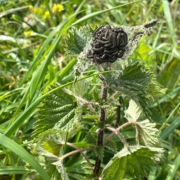
Image taken by Claire – Happy caterpillars feeding on nettle at the garden perimeter.
Small tortoiseshell ? Lots of caterpillar eggs on other nettle plants nearby too!