
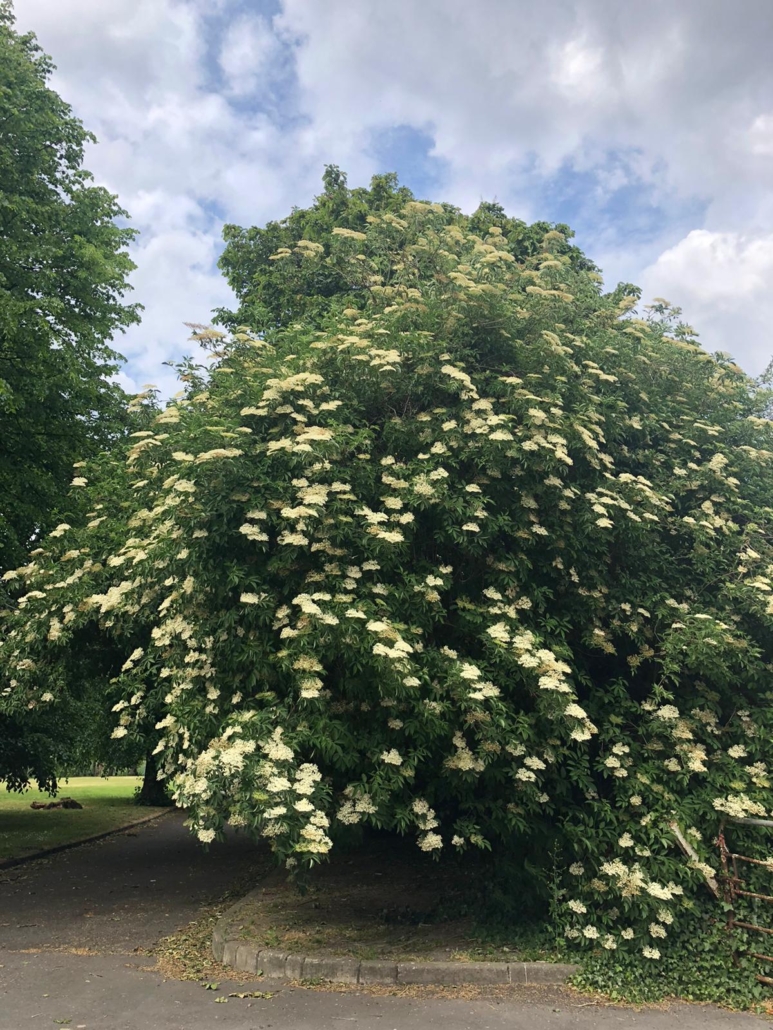
It’s that time of the year again where creamy elderflower heads pop everywhere, along the canals, peoples back gardens, or at the back of fairview park. Every year I make a batch of Elderflower champagne – because well… you could make cordial but as the saying goes there’s no pain in champagne! This delicious tipple is so easy to make and makes a great gift to bring along to a bbq, or simply to sip after a sunny day in the garden.
This is a natural ferment, there is no added yeast in this recipe, The flowers are not scalded or sterilised, which leaves the wild yeasts naturally present on the blooms to do the fermentation for you.
Ingredients
Makes 4.5 litres (but you’ll want way more this so double or quadruple it!)
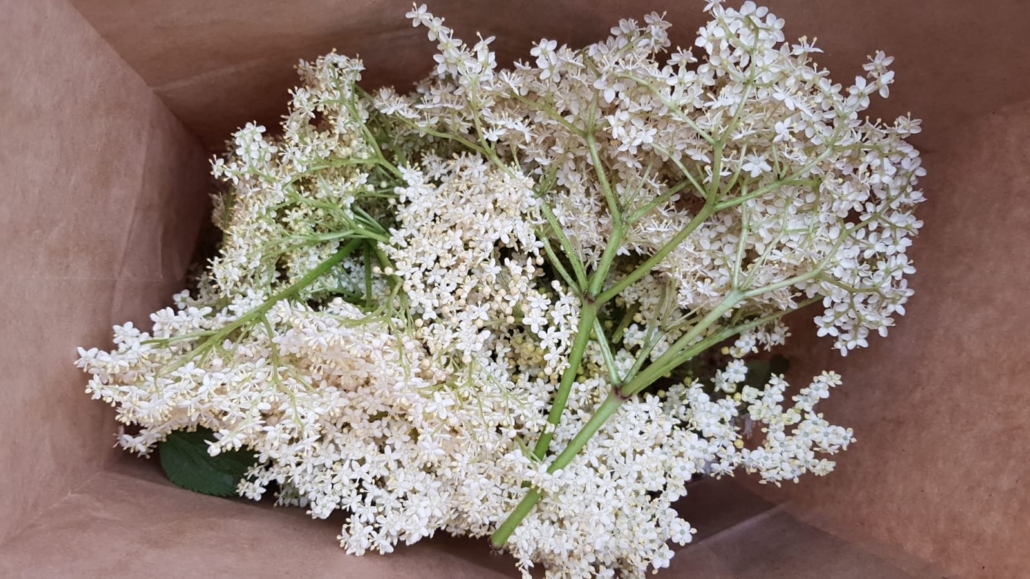
- 6 x Freshly picked Elderflower heads (see below for tips)
- 2 z Unwaxed Lemons – note the difference!
- 750g x Castor Sugar
- 2 tablespoons of vinegar, something quality like apple cider vinegar or white wine vinegar
What you’ll need
- Clean Plastic fizzy drinks bottles
Plastic bottles are better than glass because you can give them a squeeze to see how much pressure has built up while they ferment, and if you forget them for a few days they won’t explode – the crinkles / crimp at the bottom will pop out instead, and the noise of the bottle falling over will alert you. - A big clean bucket or tub
I use an Ikea plastic tub that has a loose fitting lid
I think plastic is best. When making kombucha or Kefir metal can disrupt the yeasts so I assume it’s the same here but I might be wrong! - Elderflower heads:
You’ll want to pick the young flowering heads that are full of pollen, the leaves haven’t started to brown and ideally on a day when it’s been sunny and still for a few days beforehand. You’ll want to pick them above waist height (so that you avoid any flowers at the height of peeing dogs!!) The flowers may have an odd bug on it, I usually leave them on some newspaper or brown paper for about 30 mins before using them to allow time for any critters to wriggle away but they’ll do no harm. But you’ll want to use the flowers quickly enough because if you leave them longer the smell / aroma will change.
Method
- Put 4 Litres of water in your container of choice (.5 litre to follow in step 5)
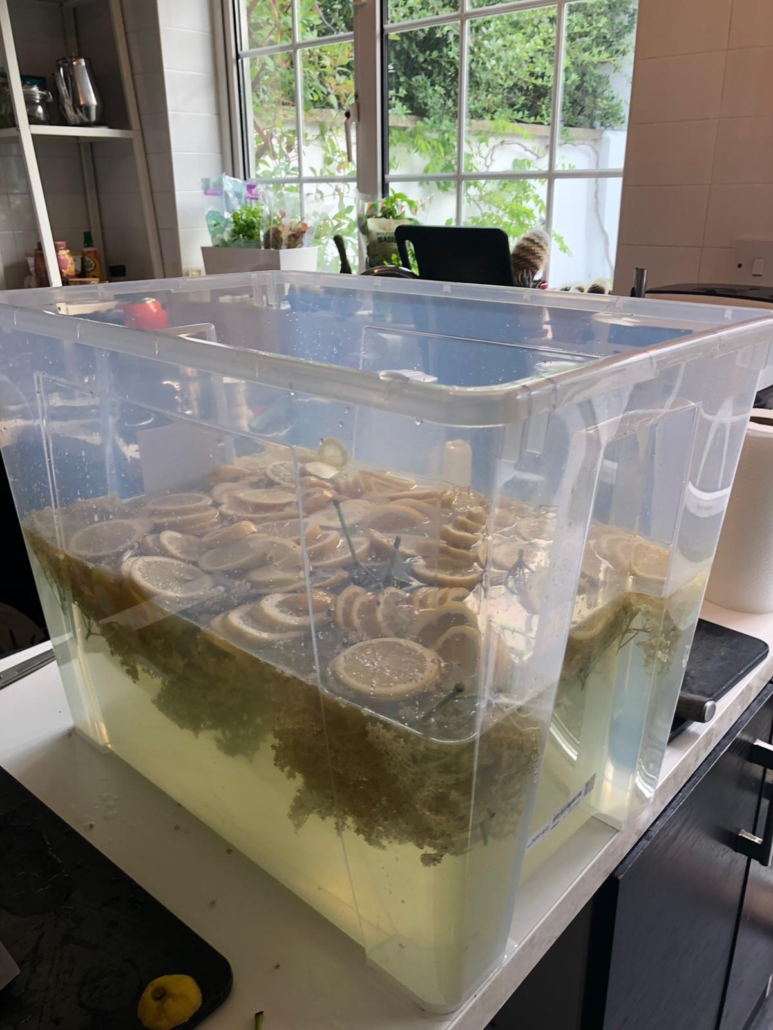
- Slice up your 2 x unwaxed lemons and pop them in.
- Dunk your 6 elderflower heads into this lemony bath by the stalk and submerge them, leave them for 24-36 hours.
- Strain the liquid (i use a plastic sieve here to scoop out all the elderflower heads and lemons) – You won’t get all the petals or possibly floating bugs but dont worry it won’t affect the taste at all. You could strain it through a clean muslin cloth if you wanted it perfect.
- Now it’s the time to dissolve your 750g of sugar in the 0.5 litre remaining boiled kettle water. You can do this in a clean saucepan, bring it to the boil and stir until dissolved. Leave it to cool then add this to your elderflower liquid.
- Add 2 x teaspoons of vinegar and stir again with a plastic stirrer.
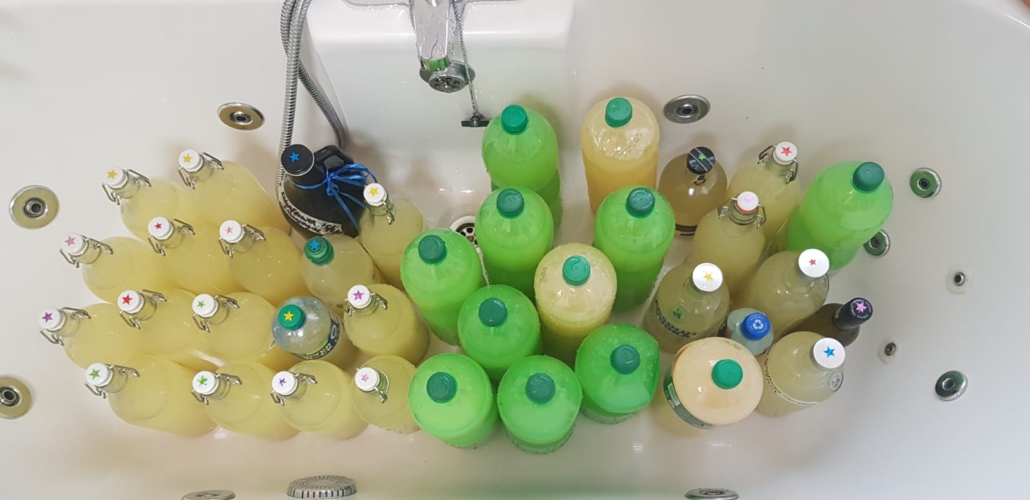
- Pour into fizzy drinks bottles. Place the tops on to keep fruit flies out, but don’t screw them on tight yet – just stand the bottles in a corner (ideally in the rinsed plastic tub that you used for the mix) and keep an eye on them. After a few days they will start to make tiny bubbles as the wild yeasts get to work on the sugar.
- The bubbles will get faster and then after about 10 days or two weeks (depending on the temperature of your room or how much yeast was in in the flowerheads etc) the bubbles will start to slow down
- When they look like they have pretty much stopped, screw the lids down and put the bottles somewhere fairly cool. Give them another few days to generate enough gas to carbonate themselves, and you’re set – just refrigerate the bottle before you need it, and serve over ice with a fresh slice lemon.
The elderflower champagne is still ‘alive’ and continuing to ferment, so the longer it is stored the more alcoholic (and drier) it will become. For me it’s at its perfect peak around the 2 months later but keep a note of how long it takes to be perfect for your taste, and bear that in mind for following years: by three months old it will be too dry for most tastes (but maybe not for a cocktail ingredient), but unless you make large quantities it’s unlikely to last that long!
The trick with this method is to keep checking the pressure in the bottles, particularly for the first few weeks. Just give each bottle a good squeeze – if you can’t squeeze the sides in at all, then the pressure is getting too high. When this happens very gently loosen the cap until you hear gas releasing, and wait until the noise dies down (be careful of the froth) before tightening up again. Righty tighty lefty loosey.
Troubleshooting
I love this recipe because its using wild yeast, and while wild yeast gives the best results for elderflower champagne, but it isn’t 100% reliable. if fermentation doesn’t start within ten days (tiny bubbles at stage 8) then add a tiny pinch of yeast to each bottle. Leave to stand for five minutes, then give it a gentle shake to disperse the yeast. I bought some fancy schmancy champagne yeast online but because we’re not trying to produce a high-alcohol drink: bread yeast is fine, as is general purpose beer or wine yeast. If you ‘rescue’ a batch this way it will tend to end up too dry unless you intervene. Taste a little from time to time and, when it’s just right, screw the lids down and move it to the fridge.
Sediment – Don’t worry its totally normal to have sediment at the bottom of the bottle / or on the side if stored in the fridge at this stage. When you pop the bottle it’ll all mix up and will go from a clear drink to cloudy with some floaty bits. Nothing to worry about here!
The only regret you’ll have making this champagne is not having made more of it.
Cheers!
Latest News
 National Community Graden & Allotment week1 October 2026 - 9:12 pm
Get your hands dirty doing some gardening or just enjoy our space… Find us through the arch beside Cloud Café, 43 North Strand Road All Welcome ! Saturday 10th of […]
 Mud Island wins the Community Impact Award for the Central Area4 September 2026 - 8:49 am
Committee members were celebrating as Mud Island won the Community Impact Award for the Central Area in the Dublin City Council City Neighbourhood Awards. This year we promoted the trojan […]