
Biodiversity September/October
The Mud Island Community Garden Biodiversity Action Group (BAG) has been busy throughout September and October 2026, carrying out a range of activities aimed at improving biodiversity, creating wildlife habitats, and encouraging native plant species within the garden and surrounding area.
During the August mini BAG session, volunteers continued essential maintenance work by cutting back invasive Buddleia shrubs and watering and mulching the recently planted native hedge. This ongoing effort helped support young saplings during what proved to be a particularly hot and dry summer.
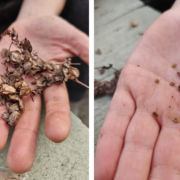
At the September meeting, members further reduced the largest remaining Buddleia plants and took part in a seed-collecting walk along the Royal Canal. The group successfully gathered seeds from thirteen native plant species, including Hawthorn, Teasel, Ribwort Plantain, Yarrow, Wild Carrot, Mugwort, Clover, Guelder Rose and Elder. Seven of the collected species had not previously been recorded during flora surveys carried out in the garden in November 2025 and July 2026, highlighting an opportunity to increase plant diversity in the space.
The group also collected seeds from Alexanders (Smyrnium olusatrum), a species that has been established in Ireland for centuries. However, after researching the plant, members noted that it can spread aggressively, particularly near waterways, and therefore requires careful consideration before planting.
A major topic discussed at the October meeting was the condition of the native hedge. A review of the hedge revealed that approximately 25% of the original saplings had been lost. Hawthorn proved particularly resilient, with almost all saplings surviving the summer. In contrast, only one Rowan survived and none of the Spindle plants remained. Members identified space for around twelve additional saplings and discussed replanting with suitable native species adapted to the site’s free-draining soil and rubble-rich conditions. Potential additions include Holly, Hazel, Dog Rose, Blackthorn and Elder, while giving Spindle another trial due to its usual tolerance of dry conditions.
September also saw BAG members visit biodiversity projects in Raheny and Killester. Participants were inspired by the work of Raheny Tidy Towns and Killester Blooms Garden, where they observed wildlife ponds, dead hedges, woodland planting, rain gardens, wildflower areas, invasive species management and community gardening initiatives.
Another important development was the submission of a grant application, in partnership with the North Strand Residents Association, to the Community Foundation Ireland. The proposal seeks funding for a Biodiversity Survey and Action Plan for North Strand, with ecologist Mary Tubridy expressing interest in supporting the project.
The October meeting concluded with volunteers cutting back the last large Buddleia specimens in the garden and setting aside branches to create a dead hedge, providing valuable habitat for insects and small wildlife. Afterwards, some members visited Reilly’s Community Garden along the Royal Canal, where they were impressed by a recently created pond, pocket forest and flourishing wildflower area. These visits continue to provide inspiration as Mud Island Community Garden works towards creating an even richer and more resilient environment for nature and the local community.